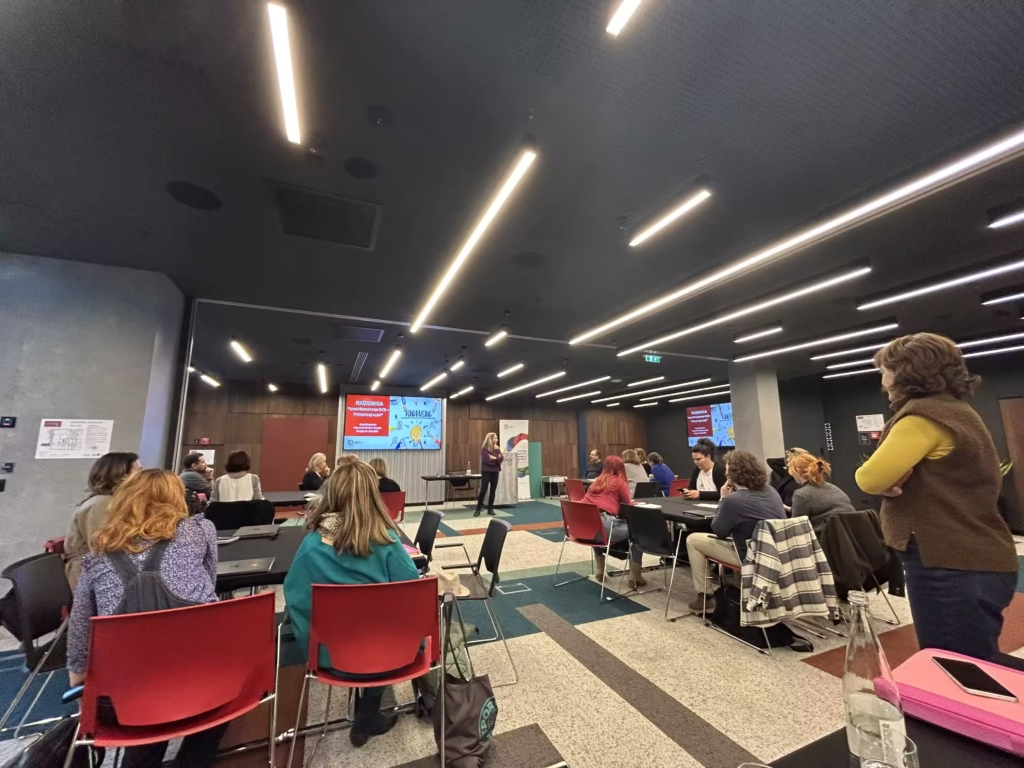
The workshop titled “Funding Sources for CSOs – Examples That Work” was held from March 31 to April 2, bringing together partner organizations of the ACT project with the aim of strengthening knowledge and skills in the field of financial sustainability and fundraising.
The program began with introductory sessions focused on getting participants acquainted and presenting the workshop concept, after which the focus shifted to the key funding sources for civil society organizations. The workshop was led by Nenad Stojanović Neni, Program Director of Proaktiv from Niš, who shared his extensive experience in fundraising. Participants had the opportunity to learn about the four pillars of financial sustainability: donors from the public and private sectors, cooperation with the business community, individual donations, and the development of commercial activities within organizations. Special emphasis was placed on building long-term relationships with donors, as well as on the strategic positioning of organizations in the local context.
The next part of the program introduced innovative fundraising methods, including organizing events as generators of financial support and using modern tools such as POS terminals. These were presented by mentor Tanja Bjelanović, who provides training and mentoring in fundraising, with a focus on sustainable financing and organizational development. The first day concluded with an evaluation session and an introduction to the topic of major donations.
The second day was fully dedicated to developing approaches for working with major donors. Through practical exercises and discussions, participants strengthened their skills in donor identification and qualification, preparing for and conducting conversations, and building long-term relationships. Special attention was given to tools and techniques for managing donor databases and maintaining cooperation.
The final day of the workshop focused on the strategic planning of campaigns for major donations. Participants discussed organizational capacities, necessary resources, and roles within teams, as well as the conditions for launching a so-called “quiet” campaign. The program concluded with a summary of key takeaways, an evaluation, and the definition of next steps for applying the acquired knowledge in practice.
The workshop provided participants with concrete tools and practical knowledge for diversifying funding sources and strengthening the long-term sustainability of civil society organizations.