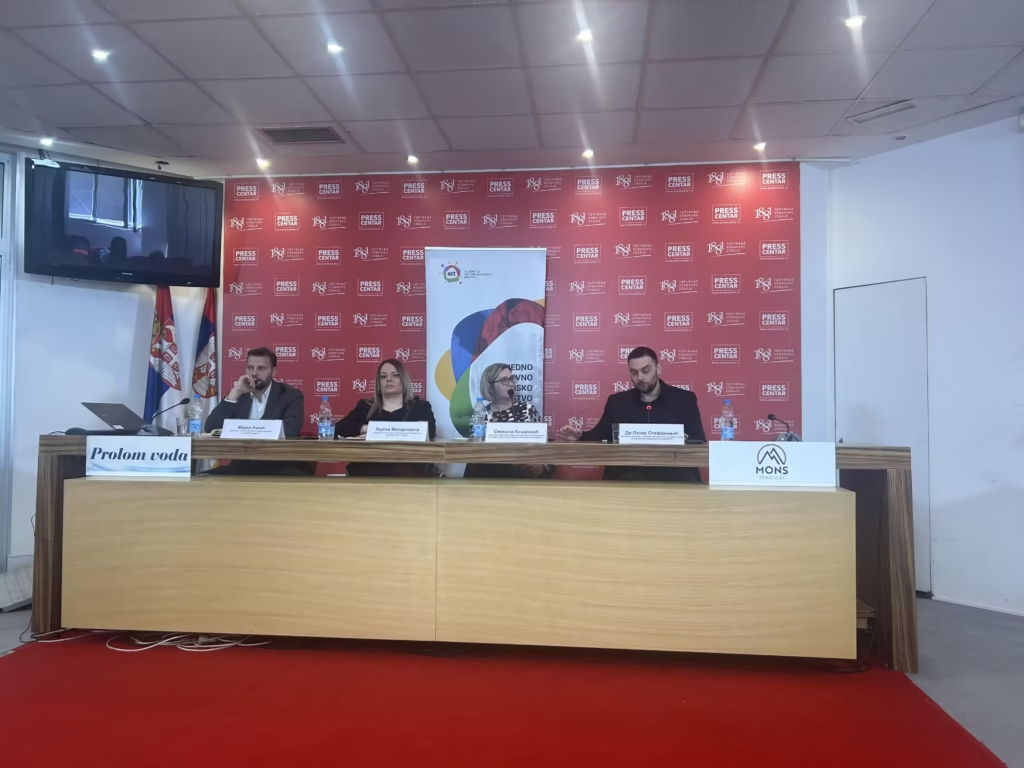
At the presentation of the Annual Report on the Rights of Persons with Disabilities for 2025, held today in Belgrade, it was highlighted that Serbia has fulfilled only one out of a total of 32 recommendations issued by the Committee on the Rights of Persons with Disabilities, while most recommendations have been only partially implemented or not implemented at all.
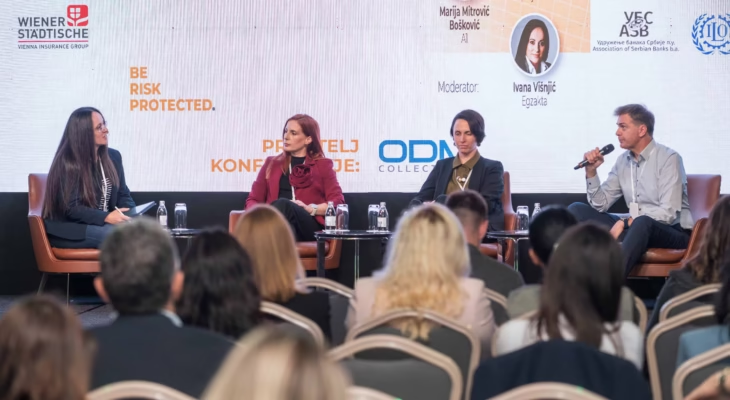
The report was presented by the Mental Disability Rights Initiative MDRI-S. Speakers at the conference included Marko Rakić, advisor on the ACT project, Ljupka Mihajlovska, Chair of the Board of the Accessibility Serbia Association and co-author of the report, Snežana Lazarević, Executive Director of MDRI and co-author, and Lazar Stefanović, MDRI associate and co-author.
The annual report provides a comprehensive analysis of the position of persons with disabilities in Serbia in the period from July 2022 to the end of 2025. It is structured in line with the United Nations Convention on the Rights of Persons with Disabilities and covers key areas such as non-discrimination, accessibility, legal capacity, independent living, education, health, work and employment, social protection, and participation in political and public life.
“Although Serbia has a developed legislative and strategic framework, persons with disabilities still face numerous barriers in everyday life—from inaccessibility and lack of support services to difficulties in exercising basic rights,” said Snežana Lazarević.
The findings of the report indicate that persons with disabilities remain at an increased risk of poverty and social exclusion. Community-based support services are assessed as insufficiently developed and unevenly accessible, while procedures for exercising rights are often complex and burdensome for users and their families.
Particularly concerning is the situation regarding the deprivation of legal capacity, where the number of persons deprived of this right continues to rise despite recommendations from international bodies. Additionally, accessibility of public buildings, transportation, and information remains a serious challenge, while the social protection system does not always provide adequate and timely support.
The final part of the report presents concrete case examples illustrating rights violations and the barriers that persons with disabilities face daily.
It was emphasized at the presentation that the report is not only an analysis of the current situation but also a clear call for systemic changes, in order to ensure a stable, predictable, and fair support system that enables a dignified life and equal participation in society.